

- Home
- Other eye conditions
- Dry eye
Dry Eye: Causes, Symptoms and Treatment
Dry eye syndrome is a chronic condition caused by too few tears or tears of poor quality that evaporate too quickly. It causes burning, redness, itching, blurred vision and — paradoxically — watery eyes. Dr. Michael E. Rom diagnoses the type of dry eye you have at Insight Eye Center in Mentor and treats it, from artificial tears and warm compresses to prescription drops and in-office care.
What is dry eye?
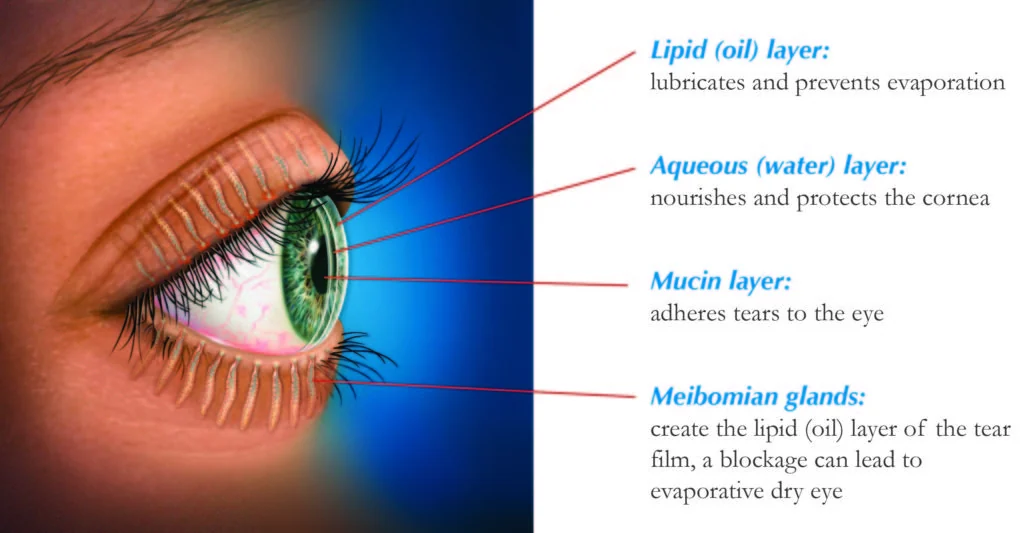
Dry eye syndrome is a chronic condition in which the eyes either do not make enough tears or make tears of poor quality that evaporate too quickly. The tear film has three layers — oil, water and mucus — and a problem with any of them leaves the surface of the eye under-lubricated, irritated and, over time, inflamed. It is one of the most common reasons adults see an eye doctor.
The most common form is evaporative dry eye, in which the tiny oil glands along the eyelid margins (the meibomian glands) become clogged, so the oily layer that keeps tears from evaporating is thin or missing. Aqueous-deficient dry eye — too little of the watery layer — is less common and is sometimes linked to medications, hormonal changes or autoimmune conditions.
Dry eye tends to worsen with age, screen use, contact lens wear, dry or windy environments, and certain medications such as antihistamines.
What are the symptoms of dry eye?
The most common complaint is dry, red and itchy eyes, often with burning, a gritty or foreign-body sensation, eye fatigue, and vision that blurs and clears with blinking. Strange as it sounds, watery eyes are another common symptom: an irritated, dry surface triggers reflex tearing, and those watery tears lack the oil needed to stay on the eye.
- redness
- burning or stinging
- itchiness
- a gritty, sandy or foreign-body feeling
- blurred vision that changes with blinking
- eye fatigue, especially with reading or screens
- watery eyes
- discomfort with contact lenses
How is dry eye diagnosed?
Dry eye can be difficult to diagnose because its symptoms are broad and are mimicked by other conditions, including allergies. Dr. Rom starts with your history — when and where the eyes bother you — and a slit-lamp examination of the eyelids, the oil glands and the tear film. Simple tests measure how much tear the eye produces and how quickly the tears break up, which distinguishes evaporative from aqueous-deficient dry eye.
Dye drops can highlight dry spots on the cornea, and the eyelid margins are checked for blepharitis, a low-grade inflammation of the lids that commonly goes with clogged oil glands. Knowing which type of dry eye you have is what guides treatment.
- EvaporativeClogged meibomian glands leave the tear film without its oil layer; tears evaporate too fast. The most common type.
- Aqueous-deficientThe lacrimal glands make too little of the watery layer. Sometimes linked to medications or autoimmune disease.
- MixedBoth problems together, which is common.
How is dry eye treated?
Most patients manage dry eye with a combination of simple measures: preservative-free artificial tears, warm compresses and lid hygiene to unclog the oil glands, omega-3 (fish oil) supplements, and changes to their environment and screen habits. When those are not enough, prescription anti-inflammatory drops, punctal plugs that keep tears on the eye longer, or in-office treatments for the oil glands are the next steps.
At home
Preservative-free artificial tears several times a day; warm compresses on closed lids for several minutes, followed by gentle lid massage and cleansing; omega-3 supplements; a humidifier; the 20-20-20 rule for screens (every 20 minutes, look 20 feet away for 20 seconds) and deliberate blinking.
Prescription
Anti-inflammatory drops such as cyclosporine or lifitegrast reduce the inflammation that drives chronic dry eye; short courses of steroid drops calm flare-ups; ointment at night protects the surface while you sleep. Antibiotics are sometimes used for lid inflammation.
In the office
Punctal plugs — tiny silicone plugs in the tear drainage ducts — keep your natural tears on the eye longer. Treatments that warm and express clogged meibomian glands can help evaporative dry eye. Dr. Rom recommends these when home care and drops are not enough.
Common questions about dry eye
Short answers to the questions patients ask most often. For anything specific to your eyes, ask Dr. Rom at your visit or call the office at (440) 286-1188.
Why do my eyes water if they are dry?
An irritated, dry surface triggers reflex tearing. Those tears are mostly water, without the oil layer that keeps them on the eye, so they run off — watery eyes are a classic sign of dry eye rather than a contradiction of it.
Which artificial tears should I use?
For frequent use, preservative-free single-use vials are gentler on the eye. Thicker gels or ointments help at night. Avoid "redness relief" drops, which constrict blood vessels and can worsen dryness with regular use. Dr. Rom can recommend a specific product for your type of dry eye.
Do warm compresses really help?
Yes, for evaporative dry eye. Heat melts the thickened oil in the meibomian glands so it can flow; a warm compress on closed lids for several minutes, followed by gentle lid massage, done daily, is one of the most effective home treatments.
Can dry eye damage my vision?
Mild dry eye is uncomfortable rather than dangerous, but severe, untreated dry eye can damage the surface of the cornea and blur vision. Persistent symptoms deserve an exam.
Does insurance cover dry eye treatment?
An exam and treatment for dry eye are medical eye care, covered by Medicare and most medical plans subject to your deductible and coinsurance. Over-the-counter tears and supplements are out-of-pocket; coverage of in-office gland treatments varies.

Tired of burning, gritty eyes?
Request an appointment with Dr. Rom in Mentor. An exam shows which type of dry eye you have, and treatment starts the same day.