
Kahook Dual Blade Glaucoma Treatment
The Kahook Dual Blade is a minimally invasive glaucoma procedure Dr. Michael E. Rom performs at the time of cataract surgery at Insight Eye Center in Mentor. Through the same tiny incision, it removes a strip of the eye's clogged drainage tissue so fluid flows out more normally, pressure falls, and most patients can reduce or eliminate their glaucoma eye drops.
What is the Kahook Dual Blade?
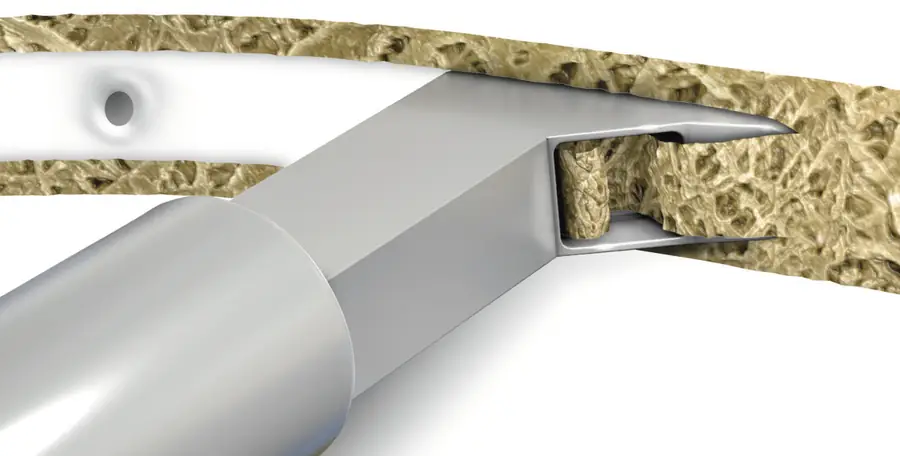
The Kahook Dual Blade is a small, single-use surgical instrument used to treat open-angle glaucoma. Its two precisely shaped blades remove a strip of the trabecular meshwork — the eye's clogged internal drain — so fluid can flow out of the eye more normally and pressure falls. Dr. Rom uses it during cataract surgery, through the same tiny incision, at Insight Eye Center in Mentor.
In a healthy eye the clear fluid that fills the front of the eye drains through the trabecular meshwork into a channel that carries it into the bloodstream. In open-angle glaucoma that meshwork does not drain efficiently, pressure builds, and the optic nerve is slowly damaged. The Kahook Dual Blade opens the pathway at its source rather than bypassing it with an implant.
It belongs to a group of procedures known as minimally invasive glaucoma surgery (MIGS): small incisions, brief added surgical time, and a quicker recovery than traditional glaucoma surgery.
Who is a candidate for the Kahook Dual Blade?
The Kahook Dual Blade is for patients with mild to moderate open-angle glaucoma who are having cataract surgery and would like to reduce or eliminate their glaucoma eye drops. It is performed at the same time as the cataract is removed, through the same incision. Patients with narrow-angle glaucoma or advanced disease may need a different approach, which Dr. Rom will explain.
Dr. Rom discusses whether the Kahook Dual Blade is right for you during your cataract evaluation, based on the type and stage of your glaucoma, your current pressure and drops, and the appearance of your drainage angle.
- open-angle glaucoma, mild to moderate
- a cataract that is ready for surgery
- eye pressure that needs drops to stay controlled
- a wish to use fewer drops, or none
How is the Kahook Dual Blade procedure performed?
The procedure adds a few minutes to cataract surgery. After the cataract is removed and the lens implant placed, Dr. Rom uses a special lens to view the drainage angle, passes the Kahook Dual Blade through the existing incision, and removes a strip of trabecular meshwork. There are no additional incisions, no implant left behind, and no stitches.
- Cataract surgery firstNumbing drops, a tiny incision, removal of the cataract and placement of the lens implant, exactly as in standard cataract surgery.
- Viewing the angleA special viewing lens on the eye lets Dr. Rom see the trabecular meshwork in the drainage angle.
- Removing the meshwork stripThe dual blade lifts and removes a strip of the meshwork, opening the pathway into the drainage channel behind it.
- Same recoveryThe incision seals on its own. Recovery follows the cataract surgery timeline, with drops and a next-day check; Dr. Rom monitors your pressure and adjusts your glaucoma drops over the following weeks.
What results can I expect from the Kahook Dual Blade?
Most patients who have the Kahook Dual Blade procedure see a significant drop in eye pressure, and because of that most can reduce the number of glaucoma drops they use — some stop them altogether. The effect is not guaranteed, and some patients still need drops or further treatment, so Dr. Rom keeps checking the pressure at follow-up visits and adjusts your regimen accordingly.
The procedure does not repair optic nerve damage that has already happened; like every glaucoma treatment, it protects the vision you still have.
Common questions about the Kahook Dual Blade
Short answers to the questions patients ask most often. For anything specific to your eyes, ask Dr. Rom at your visit or call the office at (440) 286-1188.
Is the Kahook Dual Blade an implant?
No. It is an instrument. It removes a strip of the eye's own clogged drainage tissue and nothing is left behind in the eye, unlike stent-type glaucoma devices.
Does it hurt?
No more than cataract surgery. It is done under the same numbing drops during the same procedure, and adds only a few minutes.
Will I be able to stop my glaucoma drops?
Many patients reduce their drops and some stop them, but it is not guaranteed. Dr. Rom checks your pressure over the following weeks and tells you which drops, if any, you still need.
Can I have the Kahook Dual Blade without cataract surgery?
It can be performed as a stand-alone procedure, but at Insight Eye Center it is offered with cataract surgery, where the incision already exists. Ask Dr. Rom about your situation.
Is the recovery longer than cataract surgery alone?
Generally no. The recovery follows the cataract surgery timeline. Some patients notice slight blurring from a small amount of blood inside the eye for a few days, which clears on its own.
Is it covered by insurance?
Glaucoma surgery for a medical diagnosis is generally covered by Medicare and most plans, subject to your deductible and coinsurance. The office confirms your coverage before surgery.
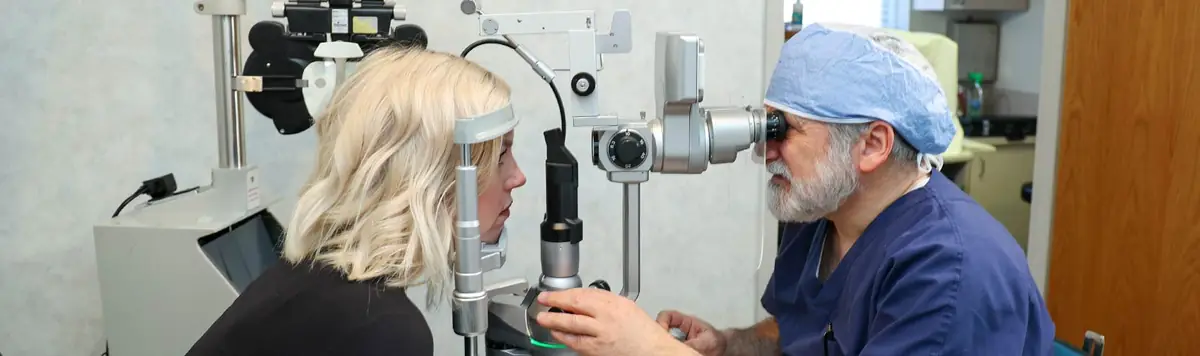
Cataracts and glaucoma? Ask about one surgery.
Request a cataract evaluation with Dr. Rom in Mentor. If you have open-angle glaucoma, he will tell you whether the Kahook Dual Blade makes sense as part of your surgery.