- Home
- Glaucoma
Glaucoma Diagnosis and Treatment in Mentor, Ohio
Glaucoma damages the optic nerve, usually without symptoms, and the vision it takes cannot be restored. Dr. Michael E. Rom diagnoses and treats glaucoma at Insight Eye Center in Mentor — with eye drops, laser and surgery, including minimally invasive procedures at the time of cataract surgery — to keep the pressure down and the vision you have.

What is glaucoma?
Glaucoma is an eye disease in which pressure inside the eye slowly damages the optic nerve, the cable that carries what the eye sees to the brain. The eye constantly makes a clear fluid; when that fluid cannot drain properly it builds up, and the pressure rises like too much water in a balloon. Over years the raised pressure destroys nerve fibers, and the vision they carried is lost.
The damage begins at the edges of your visual field, so it goes unnoticed: the eye you are not using fills in, and reading and driving vision stay sharp until late in the disease. By the time a person notices missing patches, a great deal of optic nerve has already been lost. That is why glaucoma is called the "silent thief of sight", and why it is found at routine eye exams rather than by symptoms.
Vision lost to glaucoma cannot be restored. Treatment lowers the pressure to stop further loss — which makes early detection the whole game.
What are the types of glaucoma?
Most people with glaucoma have open-angle glaucoma, in which the drainage angle of the eye looks open but the fluid drains too slowly, so pressure rises gradually and painlessly over years. Narrow-angle (angle-closure) glaucoma is less common: the drainage angle is physically narrowed or blocked, and pressure can rise slowly or, in an acute attack, suddenly and painfully.
An acute angle-closure attack — severe eye pain, headache, nausea, a red eye, blurred vision and halos around lights — is an emergency that needs treatment within hours. Some eyes have "normal-tension" glaucoma, where the optic nerve is damaged at pressures in the usual range; and some people have high pressure without damage (ocular hypertension) and are monitored rather than treated.
- Open-angleThe most common form. Slow, painless pressure rise; peripheral vision is lost first. Treated with drops, laser or surgery.
- Narrow-angleThe drainage angle is crowded or closed. Can be gradual or an acute attack. Often treated with a laser opening (iridotomy) and, when a cataract is present, cataract surgery, which deepens the angle.
- Normal-tensionNerve damage despite pressure in the usual range; treated by lowering pressure further.
- Ocular hypertensionHigh pressure without damage; monitored, and treated if the risk of damage is high.
Who is at risk for glaucoma?
Glaucoma becomes more common with age, and the risk is higher for people with a family history of glaucoma, people of African, Hispanic or Asian descent, people who are very nearsighted or farsighted, people with diabetes or high blood pressure, and anyone who has had an eye injury or long-term steroid use. Most people with early glaucoma have no symptoms at all.
Because there is nothing to feel, screening is the only reliable way to catch it. Adults over 40 should have a comprehensive dilated eye exam every one to two years, and more often if any of the risk factors above apply. The exam takes an hour and includes the pressure check and optic nerve examination that find glaucoma.
How is glaucoma diagnosed?
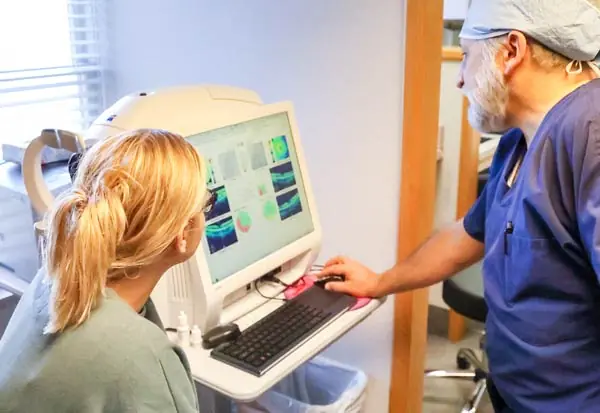
Glaucoma is diagnosed at a comprehensive eye exam that measures the pressure inside the eye, examines the optic nerve through a dilated pupil, checks the drainage angle, and tests the side vision. No single number decides it — Dr. Rom looks at the pressure, the appearance of the nerve and the visual field together, and often repeats tests over time to see whether anything is changing.
- Tonometry — measures the pressure inside the eye.
- Dilated optic nerve exam — looks for the cupping that glaucoma causes.
- Gonioscopy — a lens on the eye shows whether the drainage angle is open or narrow.
- Visual field test — maps your side vision to find early blind spots.
- Imaging of the nerve — measures the thickness of the nerve fiber layer to detect change before you notice it.
How is glaucoma treated?
Glaucoma is treated in three ways — eye drops, laser, and surgery — and all of them work by lowering the pressure inside the eye to protect the optic nerve. For many patients a daily regimen of pressure-lowering drops is all that is needed. Some need laser treatment or surgery, including procedures done at the time of cataract surgery. The goal is always the same: prevent further vision loss.
Eye drops
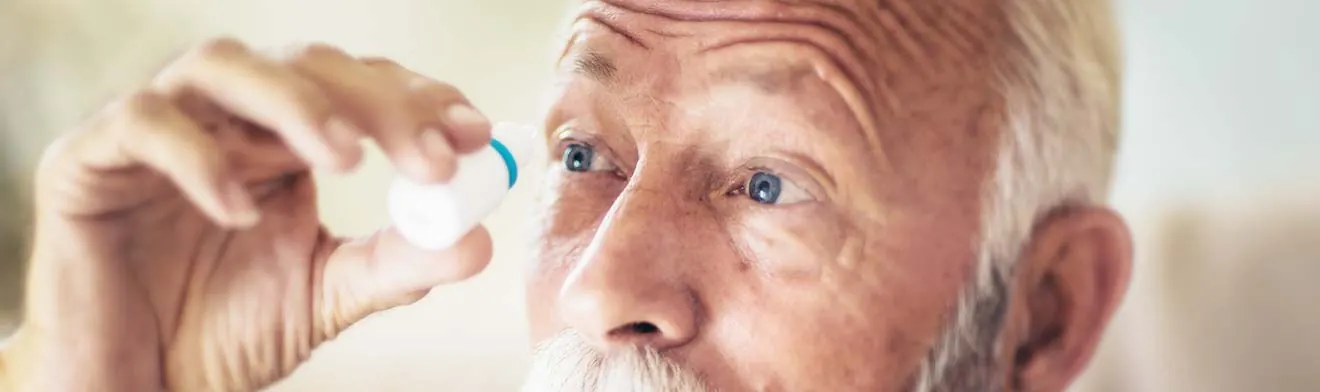
Prescription drops that reduce fluid production or improve drainage, used every day for life. They work well when taken consistently; missed doses let the pressure rise. Dr. Rom checks the pressure at follow-up visits and adjusts the regimen as needed.
Laser treatment
Laser procedures can improve drainage in open-angle glaucoma or create a small opening in the iris to relieve a narrow angle. They are brief office procedures and can reduce the need for drops.
Surgery
For patients whose pressure is not controlled, or who are having cataract surgery anyway, surgical options include minimally invasive procedures such as the Kahook Dual Blade, performed at the same time as cataract surgery to improve drainage and reduce or eliminate drops.
Glaucoma and cataract surgery together
Many patients have both a cataract and glaucoma. Removing the cataract can itself lower pressure a little, and it is the ideal moment to add a minimally invasive glaucoma procedure through the same incision. Dr. Rom has performed more than 40,000 cataract and glaucoma procedures over 30-plus years and discusses this option at your cataract evaluation. About the Kahook Dual Blade →
Very impressed! Excellent communication and professional disposition of Dr. Rom and staff. I am very happy with my results. All questions were answered. Highly recommend.Joe W. · patient
What does living with glaucoma involve?
Glaucoma is a lifelong condition that is managed rather than cured. That means taking your drops every day exactly as prescribed, keeping regular follow-up visits so the pressure and the optic nerve can be checked, and repeating the visual field and nerve imaging tests periodically so any change is caught early. With consistent treatment most people keep useful vision for life.
Tell Dr. Rom about side effects from drops rather than skipping doses — there are usually alternatives. Let your other doctors know you have glaucoma, since some medications affect eye pressure, and encourage close relatives to be examined, because the disease runs in families.
Common questions about glaucoma
Short answers to the questions patients ask most often. For anything specific to your eyes, ask Dr. Rom at your visit or call the office at (440) 286-1188.
Can glaucoma be cured?
No. Vision lost to glaucoma cannot be restored, but treatment that lowers eye pressure can stop or greatly slow further loss. With early detection and consistent treatment, most people keep useful vision for life.
Does glaucoma have symptoms?
Usually not until late. Open-angle glaucoma is painless and takes side vision first, which the brain fills in. Routine dilated eye exams are how it is found. Acute angle-closure is the exception, with sudden pain, redness and blurred vision.
How often should I be checked for glaucoma?
Adults over 40 should have a comprehensive dilated eye exam every one to two years, and more often with a family history, African, Hispanic or Asian descent, diabetes, high nearsightedness or other risk factors. Patients with glaucoma are seen more frequently, as Dr. Rom advises.
Will I need to use eye drops forever?
Often, yes — drops work only while you use them. Laser treatment or a procedure at the time of cataract surgery, such as the Kahook Dual Blade, can reduce or sometimes eliminate the need for drops.
Can cataract surgery help my glaucoma?
It can. Removing the cataract often lowers pressure modestly, and Dr. Rom can add a minimally invasive glaucoma procedure during the same surgery to improve drainage.
Is glaucoma treatment covered by insurance?
Yes. Glaucoma evaluation and treatment are medical eye care and are covered by Medicare and most insurance plans, subject to your deductible and coinsurance.
When did you last have your pressure checked?
Request a glaucoma evaluation with Dr. Rom in Mentor. A comprehensive dilated exam finds glaucoma years before you would notice it.